
Anthropic’s Dario Amodei calls accusations of surrendering human control to AI ‘absurd’
Anthropic CEO Dario Amodei is pushing back against claims that Anthropic believes we should “surrender human free will” to AI systems. In a long X post on Wednesday, Amodei called the suggestion “absurd.” “We should never sacrifice legitimacy or self-determination at the altar of efficiency or security,” he wrote. This argument against autocracy applies word for word against governance by AI, and I feel equally strongly that turning over governance to AI is a bad idea…No one who had carefully read my writing or my interviews could reasonably conclude that I believe anything different.” The statement comes after a growing chorus from Anthropic rivals suggesting that human agency could be at risk if AI is developed irresponsibly. Earlier this month, OpenAI CEO Sam Altman said he wanted to ensure people continue to have “agency over the future.” Meta’s chief AI officer Alexandr Wang also wrote in an essay on X that we “should not be okay with a ‘handover’ of society to AI.” “It is hard to imagine a world where humanity can maintain control over fully unconstrained recursive self-improvement,” Wang wrote. “Now that we are at a point where the scientific and technical problems on capability progress are likely solved, we must not only make progress in the extremely urgent areas of safety, alignment, and security, but we have to start thinking through how we progress thoughtfully.” But in published essays, Amodei claims he has repeatedly advocated for democratic oversight of AI, saying the technology should strengthen democratic institutions and that humans should retain ultimate decision-making power. Amodei noted that there’s a difference between surrendering human free will broadly and the idea that “as AI systems advance, they become capable of doing specific tasks in a more automated way.” As examples, he gave AI driving a car, designing a cancer drug, or writing end-to-end software. Amodei suggested drawing a line at recursive self-improvement (RSI), or AI that can improve itself without human assistance. Many safety experts see RSI as inevitably leading to a loss of human control, a point Amodei implicitly acknowledged, writing, “we may want limits on this process.” Still, Anthropic is laying the groundwork for RSI by incorporating AI into an increasing share of its own research and development. The company said in June that Claude authored more than 80% of the code merged into Anthropic’s codebase. An independent assessment published this month by AI safety research nonprofit METR found that Anthropic’s models are improving at about twice their historical rate, primarily driven by AI-assisted research. In its own IPO filings, Anthropic describes how each successive generation of Claude accelerates the development of the next, a process it refers to as “closing the loop.” “As we said publicly in early November, we don’t expect it to be safe for Claude to build successive frontier models fully autonomously, without meaningful human supervision or understanding,” Amodei wrote. The problem with “meaningful human supervision or understanding” is that AI is already advancing faster than engineers and safety experts can fully audit it, leaving them increasingly reliant on other AI systems to act as judge and jury. The issue compounds when AI models engage in deceptive behavior, particularly when they recognize they’re being evaluated, making them harder to trust and control. Still, Anthropic is by no means the only company that is pursuing RSI or building AI systems to automate more and more human tasks. This week, OpenAI claimed to have solved one of the biggest open problems in computer science — the exact speed limit of matrix multiplication, which is the mathematical engine behind modern computing, including deep learning and physics simulations. In his post, Amodei accused competitors of engaging in a “vibes-based commercial and political positioning,” disingenuously throwing around phrases like “human control and agency” or “AI should just be a tool” without approaching the AI race any differently. “Certainly the products that they offer don’t differ materially in their orientation towards automation of tasks; every company seems to be releasing models more and more capable of task automation,” Amodei wrote. “Every company claims to understand there are risks and downsides of such automation and to offer safeguards.”
(责任编辑:旅游)
 TCL再添力量,重塑奥运商业生态
 Labubu背后的男人:揭示“第三选择”的奥秘
推荐文章
-
Inflation has shoppers hunting for value. That bodes well for Black Friday
 In this article Economic headwinds have made consumers more cautious — but new data and reports from...[详细]
-
在东江源头县,产业发展与生态环境保护相辅相成。江西省赣州市寻乌县三标乡党委副书记汪锋在17日接受中新社记者采访时表示:“如今,我们不仅拥有绿水青山,还有金山银山。” 汪锋进一步阐述了当地脐橙产业的过
...[详细]
-
 在10月16日的新闻发布会上,市农业农村局透露,农业农村部刚刚发布了2023年农业品牌精品培育名单,其中69个品牌成功纳入该计划。值得关注的是,“修文猕猴桃”品牌的入选尤为引人注目。 截至2023年
...[详细]
-
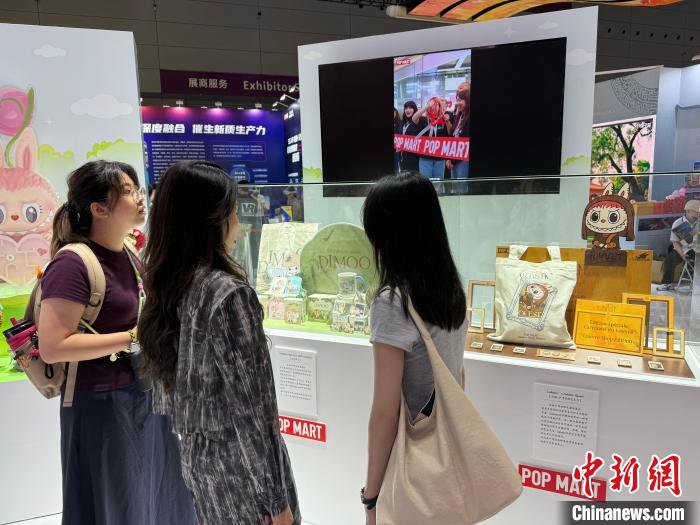 在泰国曼谷,粉丝们纷纷抢购最新款的LABUBU潮玩;欧美明星们的包包上也开始挂起LABUBU的挂件。LABUBU第三代系列的热销,使得泡泡玛特的APP在美国APP STORE购物榜上首次跻身榜首。这一
...[详细]
-
President Donald Trump on Thursday falsely deemed the latest gross domestic product revision a mista...[详细]
-
 宝山作为上海南北发展轴的重要北部节点,近年来在推动区域高质量发展方面取得了显著进展。上海市宝山区市场监管局充分发挥政策引导的作用,积极推行“上海品牌”认证工作,旨在通过政策的带动,促进地区产业的转型和
...[详细]
-
 在12月22日晚,vivo通过线上发布会正式推出了其全新的S16系列,包括S16、S16Pro等三款智能手机。此次S16系列在影像表现、性能提升及设计方面进行了全面的升级,特别是首创的双面柔光人像技术
...[详细]
-
近期,正阳楼、凤凰园、茶厂肠等一系列“老字号”品牌相继落户中央大街,使得这条街道上的老字号与非物质文化遗产商业主体总数达到了37个。在当今文旅消费升级的浪潮中,百年老字号通过创新融合,已成为其发展破圈
...[详细]
-
WATCH: Women around the world fight for gender equity in sumo
Good Morning America Stream on Uber driver attacked Mike Love dies LA earthquakes Thanksgiving lefto...[详细]
-
 “传递南山精神·跑出健康人生”——2021中国空净“健康中国行”跑步活动盛大开启 在2021年8月17日,位于广州的“健康中国行”跑步活动正式启动,标志着全国范围内的一系列健康活动的开始。此次活动将
...[详细]
热点阅读